

Princeton and UCLA researchers tested both methods. The results surprised everyone — especially tablet lovers.
The Great Debate: Laptop or Notebook?
Walk into any coaching class in Kota, any college lecture hall in Delhi University, or any CBSE school in Bangalore — and you will see the divide. Half the students are furiously typing on laptops or tablets, while the other half are scribbling in notebooks. Both groups believe their method is superior. But what does science actually say?
The Princeton Study That Changed Everything
In 2014, researchers Pam Mueller and Daniel Oppenheimer at Princeton University conducted a landmark study published in Psychological Science. They gave students a TED talk to watch and told one group to take notes on laptops and the other by hand.
The results were striking:
- Factual recall: Both groups performed equally on basic fact questions
- Conceptual understanding: Handwriters scored significantly higher — by 15-20%
- Long-term retention (1 week later): Handwriters outperformed laptop users by an even wider margin
Why? Laptop users tended to transcribe lectures word-for-word (verbatim). Handwriters, because they could not write as fast, were forced to process, summarize, and rephrase — which is exactly what the brain needs to form lasting memories.
The "Encoding Hypothesis" — Why Hand Beats Keyboard
Cognitive scientists call this the encoding hypothesis. When you write by hand, your brain performs three simultaneous operations:
- Listening — processing the incoming information
- Selecting — deciding what is important enough to write down
- Translating — converting ideas into your own words and spatial layout
Typing on a keyboard bypasses step 2 and 3. Your fingers become a transcription machine while your brain goes on autopilot. This is why students who type notes often cannot remember what they typed just hours later.
When Handwritten Notes Win (Use Paper Here)
NCERT Chapter Revision
When you are revising NCERT chapters for board exams, writing key points by hand forces you to engage with the material. Use a colored pen for headings and a blue gel pen for content. Write in your own words — not copy-paste from the textbook.
Coaching Class Lectures
Physics, Chemistry, and Math lectures at coaching institutes like Allen, FIITJEE, or Resonance move fast. Writing notes by hand helps you stay focused and process the concepts in real-time. Many JEE toppers swear by hand-written revision notes.
Formula Sheets
Mathematical formulas, chemical equations, and physics derivations are best learned by writing them repeatedly by hand. The motor memory of writing a formula helps you recall it faster during exams.
Mind Maps and Diagrams
There is no substitute for hand-drawn mind maps and diagrams. The spatial arrangement, the arrows connecting concepts, the colors — all of these create visual memory anchors that digital tools cannot replicate as effectively.
When Digital Notes Win (Use Apps Here)
Organizing Large Volumes of Information
If you are preparing for UPSC or a law entrance exam with hundreds of current affairs topics, digital notes are better for searchability. You can instantly find any topic instead of flipping through 20 notebooks.
Collaborative Study Groups
Study groups preparing for competitive exams benefit from shared Google Docs or Notion databases where everyone adds notes from different sources.
Reference Material Collection
Bookmarking articles, saving PDFs, and organizing reference links — digital tools are clearly superior for building a study resource library.
The Hybrid Method — Best of Both Worlds
The smartest approach for Indian students is a hybrid system:
| Activity | Use | Why |
|---|---|---|
| Class / coaching notes | Handwritten (notebook) | Forces active processing |
| Revision notes / summaries | Handwritten (separate notebook) | Deepens memory encoding |
| Formula sheets | Handwritten | Motor memory helps recall |
| Current affairs / factual data | Digital (Notion / Google Docs) | Easy to search and update |
| Mind maps | Handwritten (blank/dotted notebook) | Spatial memory is better on paper |
| Study schedule / timetable | Digital (Google Calendar) | Reminders and syncing across devices |
| Practice problems | Handwritten (rough notebook) | Exams are on paper — practice the same way |
Best Notebooks for Handwritten Notes
If you are convinced to write more by hand (you should be), here is what to look for:
- Paper weight: 70-80 GSM minimum — prevents ink bleed-through
- Size: A4 for detailed notes, A5 for portable revision notes
- Ruling: Ruled for text-heavy subjects, plain/dotted for diagrams and mind maps
- Binding: Spiral for coaching notes (lays flat), stitched for long-term revision notes
Pro Tip From CBSE Toppers
Interview any CBSE topper and you will find a common pattern — they maintain two sets of notes. The first set is rough class notes (written fast, not neat). The second set is a polished revision notebook where they rewrite key concepts in their own words, add diagrams, and highlight formulas. This rewriting process itself is the most powerful revision technique.
Recommended Products

Natural fish new schoolbags for primary school students to reduce the burden of men and women for grades 2-5
A4 ruled notebook (80 GSM) — ideal for class notes
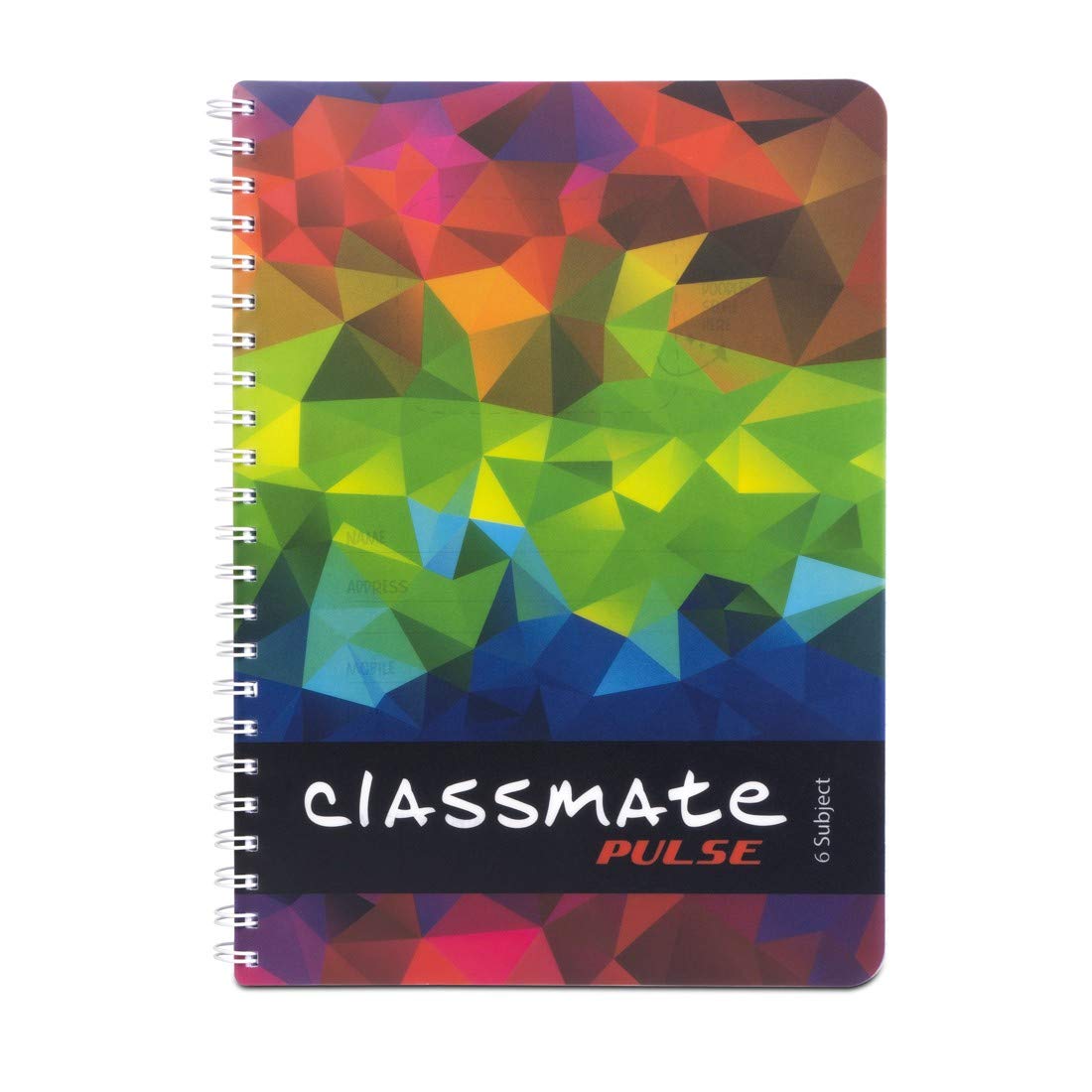
Classmate Soft Cover 6 Subject Spiral Binding Notebook, Single Line, 300 Pages
Cello Butterflow gel pen — smooth writing for long sessions
.jpeg)
Premium quality pencil box set
Sticky notes combo — for revision bookmarks and quick summaries